BMW AG is pushing the boundaries of automation once again — this time on European soil. For the first time in Germany, humanoid robots are being tested on real factory floors as part of a strategic pilot aimed at blending artificial intelligence (AI) with physical manufacturing, a concept BMW calls Physical AI. The move signals a potential shift in how industrial production might evolve across Europe’s automotive sector.
From Concept to Factory Floor
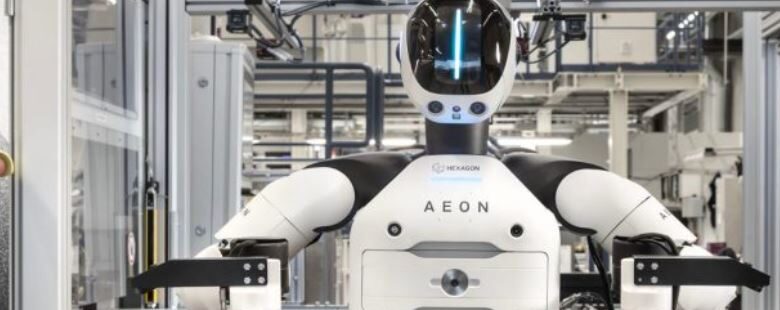
At BMW’s Leipzig plant in Germany, humanoid robots made by Swedish‑Swiss firm Hexagon Robotics have begun assisting with production tasks such as battery assembly and component handling. These robots, dubbed AEON, stand roughly human‑sized and use AI‑driven motion systems to navigate the shop floor, handle tools, and perform repetitive work.
This deployment builds directly on lessons BMW learned in the U.S. — where a prior pilot with Figure AI’s Figure 02 humanoid at its Spartanburg, South Carolina plant showed that such machines can contribute meaningfully to assembly work over extended runs. In that project, humanoid robots ran 10‑hour shifts, helping build more than 30,000 vehicles with precision and endurance.
Why This Matters to European Manufacturing
BMW’s European pilot is more than a tech showcase — it’s a test bed for how intelligent machines might integrate into complex industrial systems already filled with traditional automation. Unlike fixed industrial arms, humanoid robots have the potential to adapt to different tasks and environments without massive retooling. That flexibility could be especially useful in factories that produce multiple vehicle variants on the same line.
Industry leaders across the continent are watching closely. Europe’s manufacturing base faces challenges that include labor shortages, rising wage costs, and competition from regions with more extensive automation infrastructure. The success of AI‑powered humanoids in a respected production environment like Leipzig could accelerate similar pilots across sectors from automotive to electronics assembly — where repetitive, ergonomically taxing tasks are common.
What BMW Calls “Physical AI”
At the heart of BMW’s strategy is the idea of blending data intelligence with physical action. Rather than confining AI to planning software or quality inspection cameras, BMW is embedding it in machines that can interact with the real world — from carrying components to navigating dynamic environments. The company has even established a new Centre of Competence for Physical AI in Production to develop and scale these innovations globally.
BMW executives emphasize that humanoid robots are meant to support human workers — taking on monotonous or physically demanding tasks — so employees can focus on problem‑solving, oversight, and quality control. This narrative reflects a broader trend among automotive firms, which are trying to balance automation with workforce considerations.
Broader Industry Implications
European auto makers and other industrial players are already exploring their own humanoid initiatives. Recent industry studies show multiple firms expanding robotics pilots into tasks like parts handling and shop‑floor logistics, with the goal of reducing physical strain and improving throughput.
Yet skeptics point out that humanoid robots still lag behind specialized industrial automation in speed and efficiency. Some analysts argue that the early appeal of humanoids lies in flexibility and potential future adaptability rather than immediate productivity leaps. Regardless, BMW’s move — combining AI decision‑making with physical autonomy — is a milestone: it transforms humanoid robots from laboratory curiosities into real, working factory collaborators.
What’s Next
The Leipzig pilot will continue through 2026, with further tests planned in battery module assembly and other production zones. If successful, it could lead to broader rollouts at other European facilities and even influence how global supply chains think about human‑robot collaboration.
As factories look to stay competitive in a digitized global economy, the era of intelligent, physical AI on the shop floor may have just begun — and Europe is now part of that story.